How to Make a Matcha Latte at Home (Better Than the Coffee Shop)
I used to spend way too much money on matcha lattes at coffee shops. Some were great, but a lot of them were too sweet, and some tasted like grass. So I started making them at home, and after a lot of trial and error, I can honestly say mine are better now. A homemade matcha latte takes about 5 minutes, costs a fraction of the cafe price, and you can make it exactly how you like it.
Quick answer: To make a matcha latte, sift 1 to 2 teaspoons of matcha powder into a mug, add 2 oz (60 ml) of hot water at about 175°F (80°C), and whisk until smooth and foamy. Add a little honey or maple syrup, then pour in 1 cup (240 ml) of steamed and frothed milk. For an iced matcha latte, pour the whisked matcha over cold milk and ice.
In this post I will show you how to pick good matcha, the simple tools you need, my hot and iced method, and a few flavor ideas I love.
What Is a Matcha Latte?
A matcha latte is a drink made with matcha green tea powder and milk. Matcha is made from green tea leaves that are ground into a very fine powder. Unlike regular tea, you do not steep and throw away the leaves. You whisk the powder right into water, so you drink the whole leaf.
The taste is earthy, a little grassy and slightly sweet, with a smooth, creamy finish once you add milk. If you are new to matcha, a latte is the easiest way to start because the milk softens its strong flavor.
How to Choose Good Matcha?
This is the most important part. Cheap, low quality matcha is the reason so many people think they do not like it.
- Look at the color. Good matcha is bright, vivid green. If it looks dull, yellow or brown, it will taste bitter.
- Check the grade. Ceremonial grade is the highest quality and is meant for drinking with just water. Culinary grade is stronger and more bitter, and it is made for baking. For lattes, I use a good culinary grade or a “latte grade” matcha. It holds up well with milk and costs less than ceremonial.
- Check where it comes from. Most of the best matcha comes from Japan, from regions like Uji and Nishio.
- Buy small tins. Matcha loses its flavor and color once it is opened. A 1 oz (30g) tin is a good size, and it should be used within about 1 to 2 months.
Ingredients for One Matcha Latte
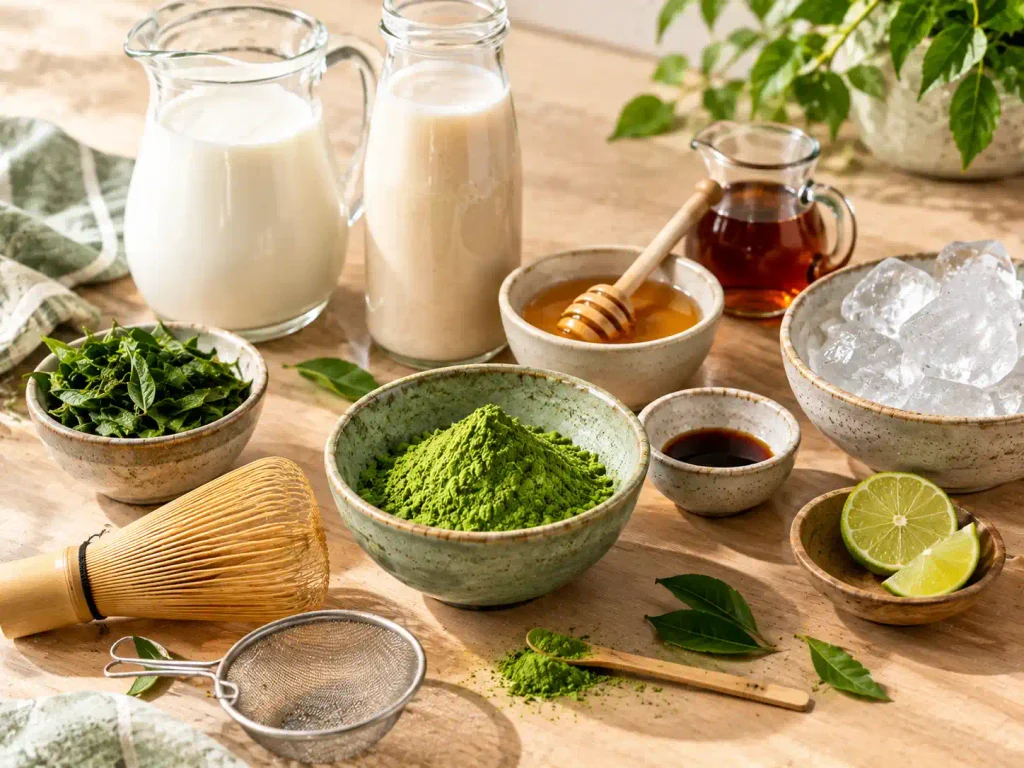
- 1 to 2 tsp (2 to 4g) matcha powder
- 2 oz (60 ml) hot water, about 175°F (80°C)
- 1 cup (240 ml) milk of your choice
- 1 to 2 tsp honey, maple syrup or sugar (optional)
- A tiny splash of vanilla extract (optional)
I use 1 teaspoon for a mild latte and 2 teaspoons when I want a strong, bold green tea taste.
Tools You Will Need
You do not need fancy equipment, but a few things make it easier:
- A small sieve or tea strainer. Matcha clumps easily. Sifting it first is the key to a smooth drink.
- A bamboo whisk (chasen) or a handheld milk frother. A bamboo whisk is traditional, but a cheap battery frother works really well too. I use both.
- A milk frother or small saucepan for steaming the milk.
- A thermometer (optional). If you do not have one, just let boiled water sit for about 2 to 3 minutes before using it.
How to Make a Hot Matcha Latte?
- Sift the matcha. Put the sieve over your mug and push the matcha through with a spoon. This takes 10 seconds and gets rid of all the lumps.
- Add the hot water. Pour in the 2 oz (60 ml) of hot water. Never use boiling water, because it burns the matcha and makes it bitter.
- Whisk until foamy. With a bamboo whisk, move your wrist fast in a “W” or “M” shape, not in circles, for about 20 to 30 seconds. With a frother, just blend for 15 seconds. You want a smooth, bright green layer with small bubbles on top.
- Sweeten it. Stir in your honey or syrup now while the matcha is warm, so it dissolves.
- Heat and froth the milk. Warm the milk until it steams, about 150°F (65°C). Do not let it boil. Froth it with your frother until it doubles in size a little.
- Pour and enjoy. Pour the milk into the mug, holding back the foam with a spoon, then spoon the foam on top.
How to Make an Iced Matcha Latte?
This is what I drink all summer long.
- Sift the matcha into a small bowl or jar.
- Add 2 oz (60 ml) of hot water (or room temperature water) and whisk until smooth.
- Stir in your sweetener.
- Fill a tall glass with ice and pour in 1 cup (240 ml) of cold milk.
- Slowly pour the matcha over the top. You get those pretty green and white layers.
- Stir before you drink.
Quick shortcut: Put the matcha, water and sweetener in a small jar with a lid and shake it hard for 20 seconds. It works almost as well as a whisk.
What Is the Best Milk for a Matcha Latte?
Any milk works, but each one gives a slightly different drink. Here is what I have found after trying them all:
| Milk | Taste and texture | Froths well? |
| Whole milk | Rich, creamy, softens bitterness | Yes |
| Oat milk | Naturally sweet, very smooth. My favorite | Yes (barista style is best) |
| Almond milk | Light and nutty, a bit thin | Okay |
| Coconut milk | Sweet and tropical | Okay |
| Soy milk | Creamy with a slight bean taste | Yes |
If you want that cafe style foam with plant milk, look for “barista” versions. They are made to froth.
6 Matcha Latte Flavors to Try
Once you have the basic recipe down, these are fun ways to switch it up:
- Vanilla matcha latte. Add ½ tsp vanilla extract or 1 tbsp vanilla syrup. This is the one I make most.
- Honey lavender matcha latte. Sweeten with honey and add a few drops of lavender syrup. It is calming and floral.
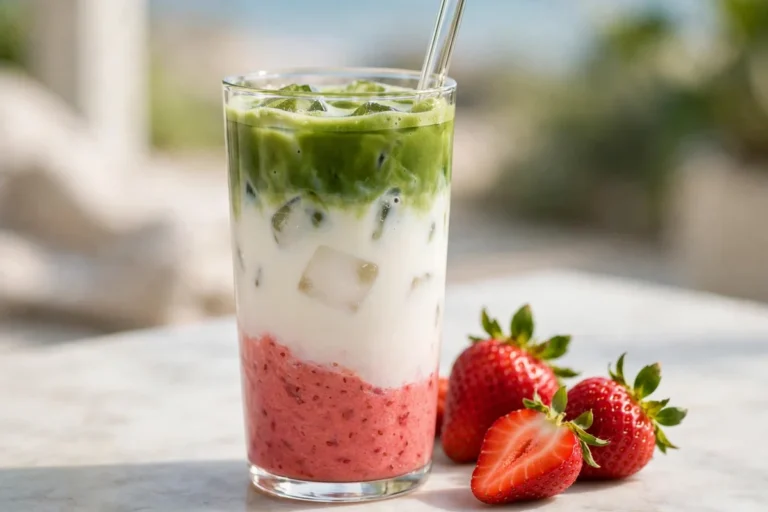
- Strawberry matcha latte. Mash 3 or 4 strawberries with 1 tsp sugar in the bottom of a glass. Add ice, milk and matcha on top. It looks amazing and tastes like summer.
- Brown sugar matcha latte. Use brown sugar syrup for a cozy, caramel like sweetness.
- Coconut matcha latte. Use coconut milk and a pinch of toasted coconut on top.
- Dirty matcha latte. Add a shot of espresso for an extra caffeine kick. The coffee and green tea combo sounds odd but it really works.
How Much Caffeine Is in a Matcha Latte?
One teaspoon (about 2g) of matcha usually has around 60 to 70 mg of caffeine, depending on the brand. An average 8 oz (240 ml) cup of brewed coffee has around 95 mg. So a matcha latte with 1 teaspoon has a bit less caffeine than coffee, and one with 2 teaspoons can have a little more.
Many people, me included, find matcha energy feels calmer and smoother than coffee, without the crash. Matcha also contains an amino acid called L-theanine, which is often linked to that relaxed but focused feeling.
Common Mistakes to Avoid
- Using boiling water. This is the number one reason matcha tastes bitter. Keep it around 175°F (80°C).
- Skipping the sifting. Unsifted matcha leaves little green clumps floating in your drink.
- Whisking in circles. Use a fast back and forth motion to get the foam.
- Old matcha. Once opened, keep it sealed in the fridge and use it within 1 to 2 months.
- Too much sweetener. Start small. Good matcha does not need much.
Matcha Latte FAQs
What does a matcha latte taste like?
A matcha latte tastes earthy, creamy and slightly sweet, with a gentle grassy note. Good quality matcha is smooth, not bitter.
Why is my matcha latte bitter?
The most common reasons are water that is too hot, too much matcha, or low quality matcha. Try water around 175°F (80°C) and a brighter green matcha.
Can I make a matcha latte without a whisk?
Yes. Shake the matcha and water in a small jar with a lid, or blend it with a handheld milk frother. Both work well.
Is it okay to drink a matcha latte every day?
For most healthy adults, one or two matcha lattes a day is fine. Keep an eye on your total caffeine for the day. If you are pregnant or sensitive to caffeine, check with your doctor.
Is a matcha latte healthier than coffee?
They are just different. Matcha has a little less caffeine per cup and contains antioxidants and L-theanine. The healthiest choice depends on how much sugar and syrup you add to either one.
Is it better to have matcha in the morning?
Morning is a great time because of the caffeine. I usually have mine with breakfast. Try not to drink it late in the day if caffeine affects your sleep.
Final Thoughts
A great matcha latte comes down to three things: good matcha, water that is not too hot, and a quick whisk. Get those right and you will never need to buy one from a cafe again. Try the classic version first, then play with the flavors until you find your favorite morning drink.